About
From the Amazon to the World
José Silva is a Field Explorer, Biogeographer, and Conservationist whose four-decade journey has taken science, policy, and the arts from the Amazon to the world.
I was born in Belém, in the Brazilian Amazon, a city where the forest meets the river and nature is a living presence rather than a backdrop. Growing up there shaped everything: my curiosity, my sense of wonder, and my conviction that humanity and the natural world are fundamentally inseparable.
Because I grew up on the city's periphery, my journey began not in a classroom, but through living with nature and witnessing deep social injustices. Long before I learned the language of biogeography or sustainability, I followed birds and their cycles, and explored the forests and rivers that were my backyard. I also learned that poverty, violence, and other harms stem from poor public governance and constrain human flourishing. This environment drove the questions that still define my career: I wanted to know why species exist where they do, how they evolve across time and space, what happens to them, and to us, if they disappear, and how we can protect nature and improve society so nobody is left behind.
At sixteen, I was fortunate to secure an internship in the Ornithology section of the Museu Paraense Emílio Goeldi. At eighteen, I was leading field biological expeditions to some of the most remote and beautiful places, first in the Amazon, then in the Cerrado, Pantanal, Caatinga and Atlantic Forest. In the meantime, I completed an undergraduate degree at the Universidade Federal do Pará, a master's degree at the Universidade de Brasília, and a PhD at the University of Copenhagen. My journey has always been inspired by the fearless naturalist Emilie Snethlage and supported by exceptional mentors, including David Oren, Fernando Novaes, Roberto Cavalcanti, and Jon Fjeldså.
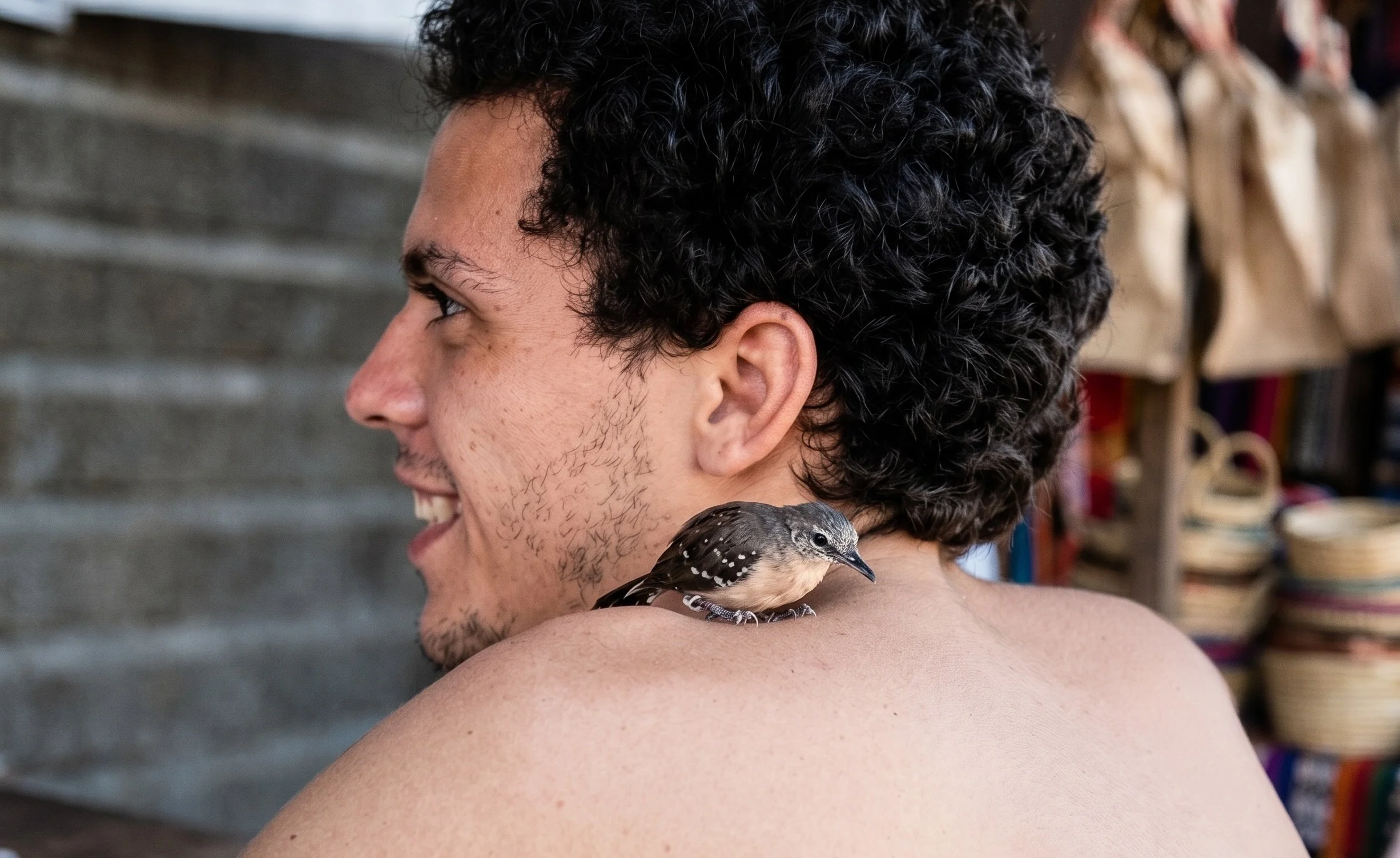
José Silva in 1986 with a female of the southern white-fringed antwren
After my PhD, I joined the Universidade Federal de Pernambuco. There, I worked with Marcelo Tabarelli and an outstanding generation of students to develop large-scale conservation programs in the Caatinga and Atlantic Forest, conduct cutting-edge research, and create a new NGO (CEPAN), which remains strong to this day. I then spent 14 years at Conservation International, growing from leading the Brazilian Amazon program to overseeing conservation across Latin America and the Caribbean, Africa, Asia, and Oceania. Working alongside six world-class conservationists and friends (Russ Mittermeier, Gustavo Fonseca, Claude Gascon, Fabio Scarano, Daniela Raik, David Emmett and John Swift) and many other gifted colleagues, the work was ambitious and deeply collaborative: building international interdisciplinary teams, mentoring the next generation of conservation leaders, designing conservation-based development initiatives, and helping create some of the world's largest tropical forest protected areas. Throughout, our central mission was to convince decision-makers of a simple but urgent truth: there is no development without nature conservation.
In 2015, thanks to Leonidas Bachas and Douglas Fuller, I returned to what I love most: research and mentoring. At the University of Miami's Department of Geography and Sustainable Development, within the College of Arts and Sciences, I found a place where interdisciplinary thinking is not only tolerated but celebrated. Here, I have been able to ask bigger questions about the sustainability of entire development pathways, the true cost of losing ecological infrastructure, and what it means for countries like Brazil to be both an environmental superpower and a nation still grappling with deep inequality. My department includes a vibrant group of outstanding faculty who share deep social and environmental concerns and are among the best in the country. Most importantly, I have the opportunity to work with generations of outstanding students who inspire my work and who, I have no doubt, will become game changers and help make our world a better place to live.
"Natural ecosystems are not obstacles to human prosperity, but rather its very foundation. Nations serious about well-being must treat them as critical infrastructure."
And then, unexpectedly, a new chapter opened when I decided to write lyrics. I learned the basics of poetry during my middle school years from some of the best Portuguese teachers anyone could have. They challenged me to read Cecília Meireles and the Brazilian modernists, and then write my own verses. In the summer of 2025, I decided to return to poetry. I was fortunate to meet two young musicians, Winston Thayer and Sam Velez, who were brave enough to turn my lyrics into songs. What emerged was Song Experiments: an intergenerational project in which the stories of people, nature, and societies become music that, we hope, will move hearts.
In the end, I think I am simply a seeker of beauty, and science and lyrics are just different ways of describing what I find along my journey. Throughout my life, I have used science to uncover the patterns and processes that reveal the world's grace. Telling these stories through songs feels like the next natural step because, although science changes minds, music changes hearts.
I believe that when we find beauty, whether through science or music, something extraordinary happens. Everything that blinds us starts to fade away. We become better people because we can finally recognize our finitude and our true place in this fantastic system we call the universe. To find beauty, we need to keep exploring.